

The Challenge: Scaling a Niche Subscription Service
Completing The Puzzle offers a unique solution to a common puzzle enthusiast problem: enjoying new puzzles without the headache of donating or disposing of completed ones. When we began managing their Google Ads account, they needed confident scaling in a niche market.
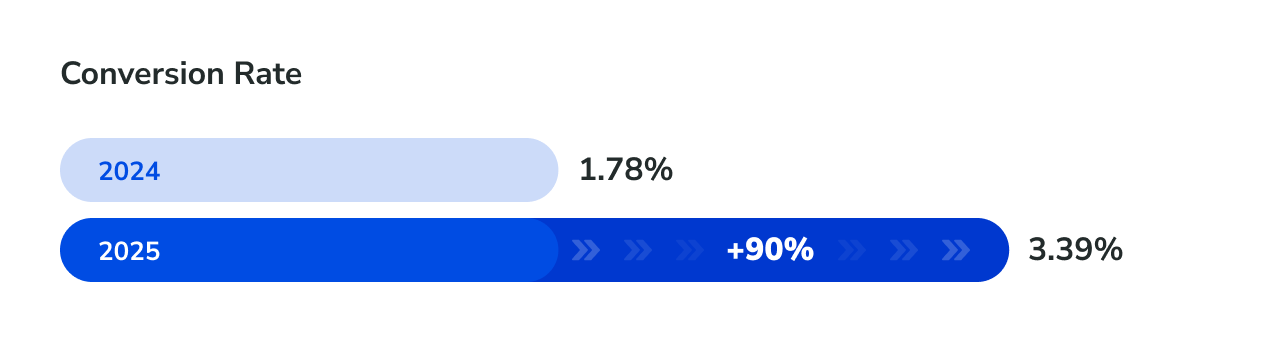
Results: 90% Conversion Rate Improvement & Efficient Growth
The Real Challenge
Completing The Puzzle operates in a niche market—puzzle subscriptions aren't as universal as dog feeders or audio equipment. While everyone has a dog, puzzle enthusiasts represent a smaller, more specific audience. The challenge wasn't just growing revenue. It was proving that fundamentals-driven optimization beats flashy promises in any market, regardless of size.
Niche market dynamics
Smaller total addressable market than mass-market products, requiring precision targeting and efficient conversion of limited traffic.
Subscription model complexity
Customer acquisition costs must justify lifetime value, and conversion efficiency directly impacts profitability.
Client openness without roadmap
The client was willing to spend more—as long as CAC and ROAS justified it. We needed to prove the path forward through systematic optimization.
Completing The Puzzle entered 2025 with a solid product but underoptimized Google Ads performance.
Starting point:
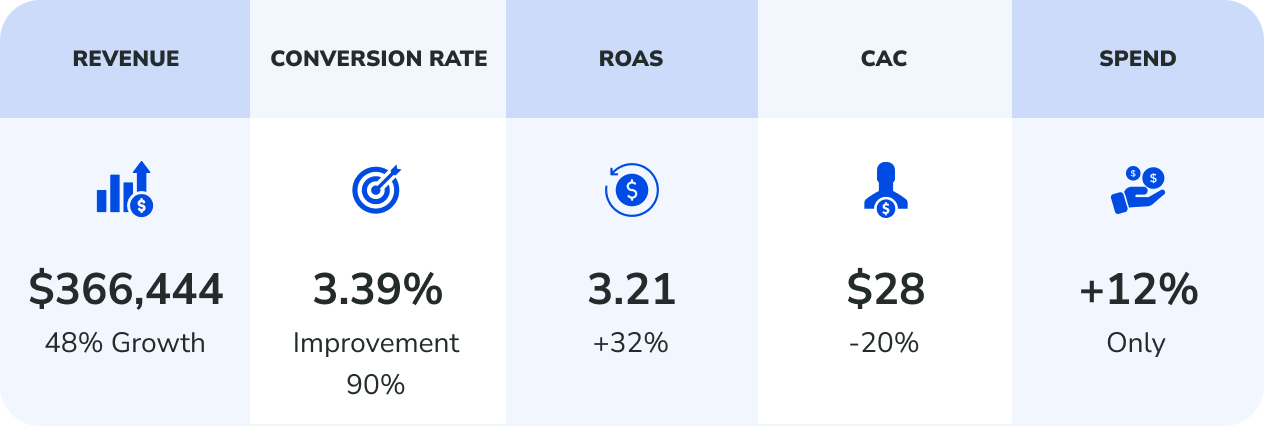
- $246,889 in annual revenue
- 2.4 ROAS (functional but room for improvement)
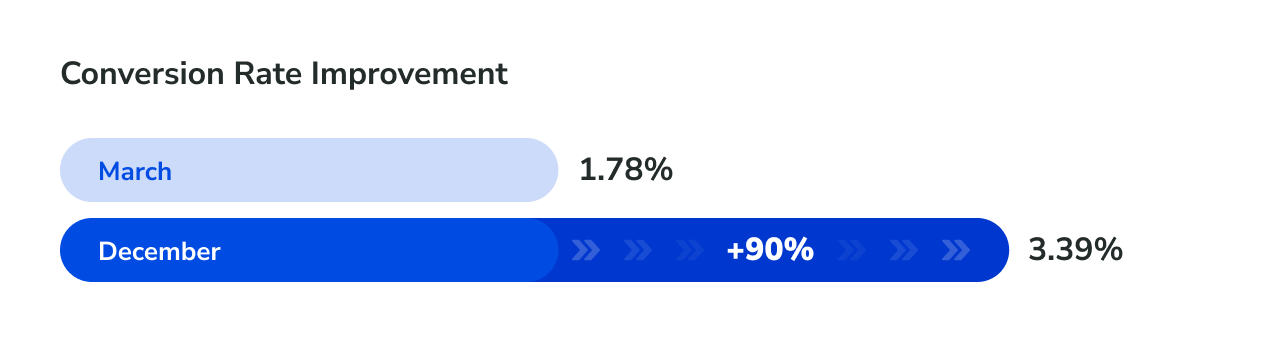
- 1.78% conversion rate (significant optimization potential)
- $34 CAC
- Limited campaign structure and granularity
The opportunity: Client was open to increased investment if performance metrics supported it—giving us room to scale strategically.
The Strategy
Our approach focused on the same foundation-first methodology that worked for Houndsy and Andover Audio, but with an emphasis on granularity that suited Completing The Puzzle's subscription model.
1. Back to Basics: Complete Account Rebuild
We started with comprehensive optimization across every element:
Campaign structure:
- Rebuilt for greater granularity and control
- Created seasonal campaigns ("puzzle gift for X")
- Developed category-specific campaigns ("puzzle subscription services")
Keyword strategy:
- Sifted through search terms systematically
- Optimized bids across entire program
- Expanded relevant keyword coverage
Audience targeting:
- Refined audience bids
- Targeted puzzle enthusiasts and gift buyers specifically
Ad creative:
- Refreshed ad copy for subscription value proposition
- Updated extensions and callouts
- Improved messaging clarity
This comprehensive refresh created the foundation for everything that followed.
2. Strategic Branded Spend Reduction
Similar to our other accounts, we identified opportunity in branded efficiency.
The approach:
- Shut off branded campaigns during non-peak seasons (outside Q4)
- Used impression share bidding to keep branded costs minimal year-round
- Reinvested savings into higher-value non-branded campaigns
The insight: While this made CAC and conversion metrics look worse in the short term (because branded always converts better), it created substantial savings to reinvest in acquisition-focused non-branded campaigns. The result: Non-branded campaigns saw 30-50% ROAS improvements and 20-30% CAC reductions, more than offsetting any branded efficiency loss.
3. Granular Campaign Structure for Maximum Control
The breakthrough was getting highly specific with campaign structure. Rather than broad "puzzle subscription" campaigns, we created:
- Gift-focused campaigns by recipient ("puzzle gift for mom," "puzzle gift for seniors")
- Service-focused campaigns ("puzzle subscription service," "puzzle rental")
- Seasonal and occasion-based campaigns
Why granularity mattered:
- More levers to pull for optimization
- Better response to different market conditions
- Clearer performance signals for scaling decisions
- Precise budget allocation based on what worked
4. Systematic Testing and Scaling
With solid fundamentals and granular structure in place, we could scale confidently. The goal: Increase spend while maintaining or improving CAC and ROAS. The execution: Methodical testing, performance monitoring, and strategic budget increases in proven campaigns.
What Worked
Fundamentals Created 90% Conversion Rate Improvement
The dramatic conversion rate increase—from 1.78% to 3.39%—came from systematic optimization across every element.
Every optimization compounded:
- Better keyword targeting = more qualified traffic
- Improved ad copy = higher intent clicks
- Refined audience targeting = better prospect quality
- Landing page alignment = smoother conversion path
Result: Nearly doubled conversion efficiency without dramatic spending increases.
Granular Campaigns Enabled Precision Optimization
Creating highly specific campaigns gave us unprecedented control. Instead of making broad adjustments to one "puzzle subscription" campaign, we could:
- Scale gift campaigns during holidays
- Optimize service-focused campaigns separately
- Adjust bids by specific audience intent
- Test messaging variations by use case
Result: 48% revenue growth on just 12% more spend.
Branded Savings Funded Non-Branded Growth
Shutting off branded campaigns during non-Q4 months and minimizing branded costs year-round created a budget buffer. Those savings got reinvested into non-branded campaigns that saw:
Result: Only 12% overall spend increase while dramatically improving efficiency and revenue.
CAC Reduction Proved Real Efficiency Gains
CAC dropping from $34 to $28 (-20%) while revenue grew 48% proved this was genuine efficiency improvement, not just increased spending. Result: Better unit economics, improved profitability, sustainable growth model.
ROAS Improvement Enabled Confident Scaling
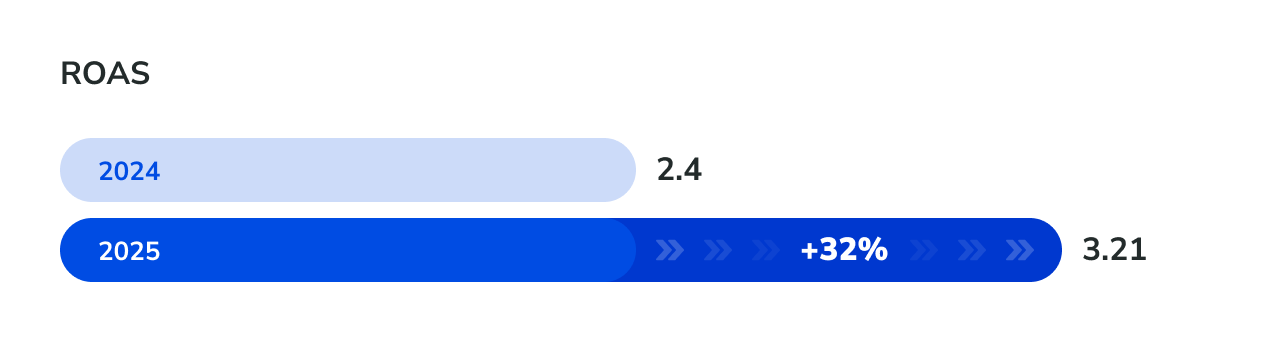
ROAS increasing from 2.4 to 3.21 (+32%) gave the client confidence to invest more in Google Ads. When every dollar returns more revenue, scaling becomes a mathematical decision rather than a gamble. Result: Client approved increased investment based on proven efficiency.
Why This Approach Worked
1. Fundamentals Over Flashy Tactics
We didn't chase silver bullets. We optimized every element systematically—keywords, bids, audiences, creative, structure.
2. Granularity Enabled Control
Highly specific campaigns gave us more levers to pull and clearer signals for optimization decisions.
3. Strategic Budget Reallocation
Branded savings funded non-branded growth, enabling scale without proportional spend increases.
4. Conversion Focus Compounded Returns
Every percentage point of conversion improvement multiplied across all traffic, creating exponential value.
5. Data-Driven Scaling
Better ROAS and lower CAC gave the client confidence to invest more, creating a virtuous cycle of growth.
The Complete Picture
The Real Win
90% conversion rate improvement and 48% revenue growth tell part of the story. The real story is about fundamentals beating hype. In a market saturated with promises of explosive growth and revolutionary tactics, Completing The Puzzle's results demonstrate what's actually reliable: systematic optimization, strategic structure, and disciplined execution.